If you’re thinking about becoming a licensed cosmetologist in Florida, you probably have a lot of questions: What do I need to qualify? How many hours of training are required? What does the board exam look like? And how much is all of this going to cost?
This guide walks you through the entire process – from eligibility requirements to passing your state exam and receiving your license from the DBPR (Department of Business and Professional Regulation). No guesswork, no filler, just what you need to know to get started.
The Process at a Glance
| Step | What to Do |
| 1 | Meet admission requirements (age, ID, SSN, diploma) |
| 2 | Complete 1,200 training hours at a DBPR-approved school |
| 3 | Pass the written state board exam (75% minimum) |
| 4 | Apply for your license through DBPR |
| 5 | Start working as a licensed cosmetologist |
Each step is explained in detail below.
What You Need Before You Start
Florida’s cosmetology license is regulated by the DBPR. Before you can enroll in a Florida cosmetology program, you’ll need to meet these basic requirements:
- Age: You must be at least 16 years old.
- Identification: A valid government-issued photo ID – either a Florida driver’s license or an Employment Authorization Document (EAD).
- Social Security Number: Required for all cosmetology students in Florida.
- Education: A high school diploma or its equivalent (GED).
There is no admission exam. Enrollment at most DBPR-approved beauty schools in Florida is direct – you meet the requirements, you register, and you start.
Step 1: Complete 1,200 Hours of Training at a DBPR-Approved School
Florida requires 1,200 hours of supervised training at a licensed cosmetology school before you can sit for the state board exam. These hours cover three core areas of professional beauty services:
Hair
This is the largest component of any Florida cosmetology program. You’ll learn cutting techniques, coloring, chemical treatments (relaxers, perms), styling, blowouts, and hair health assessment. This is the area that separates cosmetology from other beauty licenses like Facial Specialist or Nail Technician – only cosmetologists are licensed to work with hair in Florida.
Skin
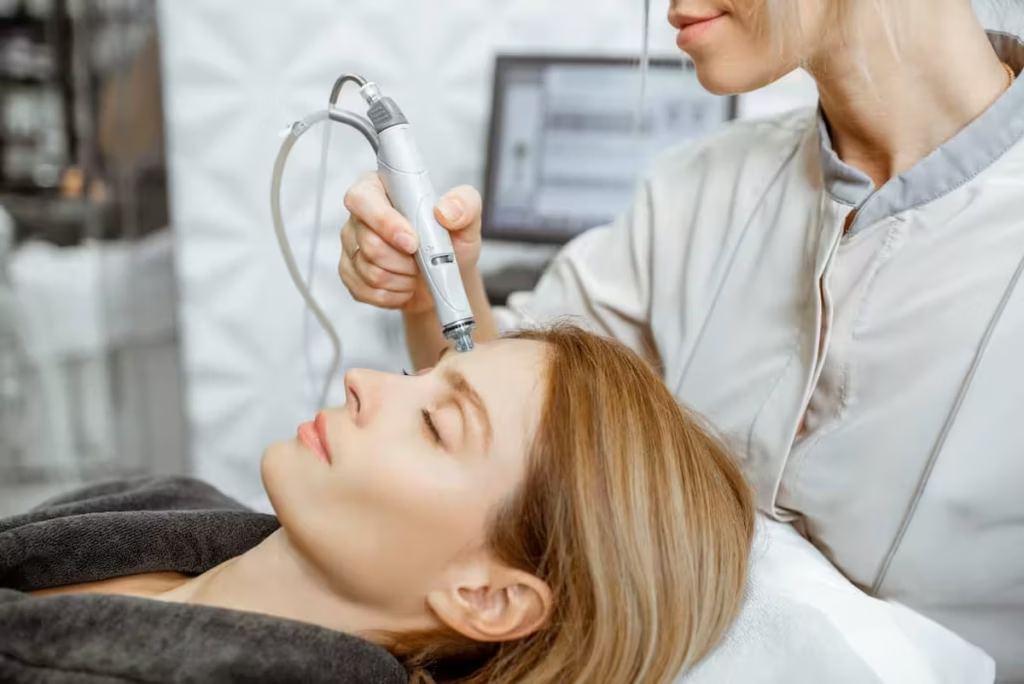
Your training also covers skincare fundamentals: facial treatments, skin analysis, makeup application, waxing, and an introduction to non-invasive facial devices. This overlaps with what a Facial Specialist learns, but as a cosmetologist you’ll have broader authorization to offer these services alongside hair and nails.
Nails
You’ll train in manicure, pedicure, and advanced nail techniques including acrylic, gel, and polygel application. This means a cosmetology credential covers everything a Nail Technician can do – plus hair and skin.
What this means in practice: Cosmetology is the most comprehensive beauty license in Florida. It authorizes you to work across all three areas – hair, skin, and nails – with a single credential. That’s why it requires the most training hours.
Your training hours are your hands-on practice. You’ll work on real techniques, real clients (in supervised settings), and real scenarios throughout the program. The school covers the practical side; the state exam covers the written knowledge.
Step 2: Prepare for the Florida State Board Exam
Once you complete your 1,200 hours, your school will help you understand the process to apply for the state board exam through the DBPR.
Here’s what you need to know about the exam:
- Format: The board exam is written only – it is a multiple-choice test. Your practical skills are demonstrated through your training hours at school.
- Passing score: You need a minimum of 75% to pass.
- Content: The exam covers Florida cosmetology laws and regulations, sanitation and safety protocols, chemistry basics relevant to beauty products, and the theoretical foundations of the services you trained in (hair, skin, nails).
- HIV/AIDS course: Florida law requires completion of an HIV/AIDS education course as part of your training. DBPR-approved schools include this in their curriculum – it’s not something you need to arrange separately.
A good beauty school in Florida doesn’t just teach you techniques – it prepares you specifically for this exam, so you walk in confident on test day.
Step 3: Apply for Your License Through DBPR
After passing the board exam, you apply for your license directly through the Florida DBPR. The application requires:
- Proof of completed training hours from your school
- Your board exam results
- Required application fees
- Your identification and Social Security Number
Many schools handle the administrative side of this process for their students – including filing the application and covering the associated fees – so ask your school what’s included before you enroll.
How Much Does It Cost to Become a Licensed Cosmetologist in Florida?
The total investment depends on the school you choose. Here’s what realistic costs look like at a DBPR-approved academy:
- Tuition and training: Around $10,000 for the full 1,200-hour program. This typically includes your training materials, textbooks, supplies, school uniform, and the processing of your state license – including the cost of the board exam itself.
- Payment plans: Most schools offer internal payment plans. For a program of this size, you can expect options like weekly or biweekly installments spread across the duration of your studies, with deposits starting around $500.
- Financing: Some schools also partner with external lenders for financing options at 12 or 24 months.
- Pay-in-full discount: It’s common to find a 5% discount for students who pay the full tuition upfront.
Any DBPR-approved program should be transparent about what’s included and what isn’t. If license processing fees, exam costs, or materials are extra, you want to know that before you start.
Have questions about costs or payment options? Talk to our admissions team in Spanish or English – [WhatsApp (407) 914-5210].
One License, Three Career Paths
What makes cosmetology unique in Florida is that one license opens three distinct career directions – and you can combine them however you want:
Salon and barbershop employment: Work as a stylist, colorist, or full-service cosmetologist in an established salon. This is the fastest path to steady income after graduation, with opportunities across the Orlando/Kissimmee metro area and beyond.
Medical aesthetics and MedSpa: With additional certifications (like chemical peels, dermaplaning, PRP, or microneedling), cosmetologists can work in clinical aesthetics environments. Your license is the foundation – the certifications build on top.
Independent business: A cosmetology license authorizes you to offer hair, skin, and nail services. That range makes it possible to build a private practice or open your own salon with a full service menu – something narrower licenses don’t support as easily.
Looking for a DBPR-Approved School in Spanish and English?
Here’s something most cosmetology guides don’t mention: very few beauty schools in the Orlando and Central Florida area offer their full program in Spanish.
If Spanish is your first language, this matters – not because you can’t learn in English, but because understanding complex regulatory content, product chemistry, and exam preparation in your strongest language gives you a real advantage when it’s time to sit for the board exam.
PSB Academy (Psicosaludbelleza Academy) in Kissimmee, Florida, is one of the few DBPR-approved cosmetology schools in the area that delivers its entire program in both Spanish and English – the curriculum, the materials, the instruction, and the exam preparation. The program includes everything outlined in this guide: the full 1,200 hours across hair, skin, and nails; all training materials and textbooks; school uniform; HIV/AIDS course; license processing; and board exam costs – all covered in your tuition.
The school holds a 5.0-star rating across multiple Google reviews – a reflection of the experience their students and graduates report consistently.
Enrollment is direct (no admission exam), and they offer flexible payment plans as well as external financing options.
Want help understanding the process? Talk to the PSB Academy admissions team in Spanish or English – [WhatsApp (407) 914-5210].
What Comes After Your License
Your license is the starting point, not the ceiling. Once you become a licensed cosmetologist in Florida, you can pursue advanced certifications that expand your services and raise your prices. Certifications available to cosmetologists include:
- Platelet-Rich Plasma (PRP) – requires a Phlebotomy credential as well
- Dermaplaning
- Chemical Peels
- Dental Whitening
- Body Contouring
- Body Whitening
- Body Waxing
- Eyebrow Design and Henna Tinting
- Lash Extensions
- Brow and Lash Lifting
- Nutrition for aesthetics professionals
- Marketing and business development
- Dipping Powder and Polygel
- Medical Pedicure (Chiropody)
- Microneedling with Tattoo License
Most of these certifications are completed in a single day of in-person training, so you can start adding them to your service menu almost immediately after getting licensed.
Frequently Asked Questions
Is the Florida cosmetology exam written or practical?
The state board exam is written only – it’s a multiple-choice test. Your practical skills are evaluated through your 1,200 training hours at school, not on exam day.
Do I need to speak English to study cosmetology in Florida?
The board exam and licensing process are administered through the DBPR, but some beauty schools in Florida offer their full program in Spanish. If Spanish is your first language, studying at a bilingual school can give you a significant advantage in understanding regulatory content and exam preparation.
How much does cosmetology school cost in Florida?
Tuition at a DBPR-approved cosmetology school typically runs around $10,500 for the full 1,200-hour program. This usually includes materials, textbooks, uniform, and license processing. Most schools offer internal payment plans and some partner with external lenders for 12- or 24-month financing.
Can I work in hair, skin, and nails with one license?
Yes. A Florida cosmetology license is the only beauty license in the state that authorizes you to work across all three areas – hair, skin, and nails – with a single credential. Other licenses like Facial Specialist or Nail Technician cover only one area each.
What can I do after getting my cosmetology license?
You can work in salons, barbershops, MedSpas, or start your own business. You can also pursue advanced certifications – like chemical peels, PRP, dermaplaning, or microneedling – that expand your service menu and increase your earning potential.